Rugby Police and Magistrates Court
Overview
Hills Energy Management Solutions delivered a new Building Management System at Rugby Police Station as part of wider boiler room improvement works, while also extending visibility across the station’s existing HVAC systems.
The project was designed not only to modernise boiler room controls, but also to give the client a clearer view of older site-wide systems without the cost and disruption of full replacement. To support future energy and building performance improvements, we also introduced wireless environmental monitoring throughout the building, creating a stronger data foundation for ongoing review, maintenance planning and future upgrades.
Client requirement
The client needed a more modern and capable BMS platform for the boiler room, while also improving visibility of the wider building services without replacing the entire existing controls infrastructure.
The project aimed to:
- modernise boiler room controls
- bring new and existing HVAC systems into a more unified management platform
- improve day-to-day visibility for site teams
- assess the condition of older controls infrastructure
- introduce better building performance data to support future upgrades and energy-saving opportunities
The overall goal was to create a more practical and future-ready controls environment while keeping disruption, cost and unnecessary replacement to a minimum.
The challenge
The main challenge was integrating a new BMS with an older controls estate that remained important to the station’s day-to-day operation.
The existing systems were ageing and becoming less effective, but they still formed part of the operational building infrastructure. A full replacement was neither necessary nor practical, so the project needed to create a more modern layer of control and visibility while working sensibly with the systems already in place.
At the same time, the station needed to remain fully operational throughout the works, and the client wanted a clearer understanding of the condition of the existing systems in order to plan future maintenance and upgrade priorities with greater confidence.
What we delivered
We installed a new BMS to provide modern monitoring and control of the boiler room and to act as a more capable platform for wider site integration.
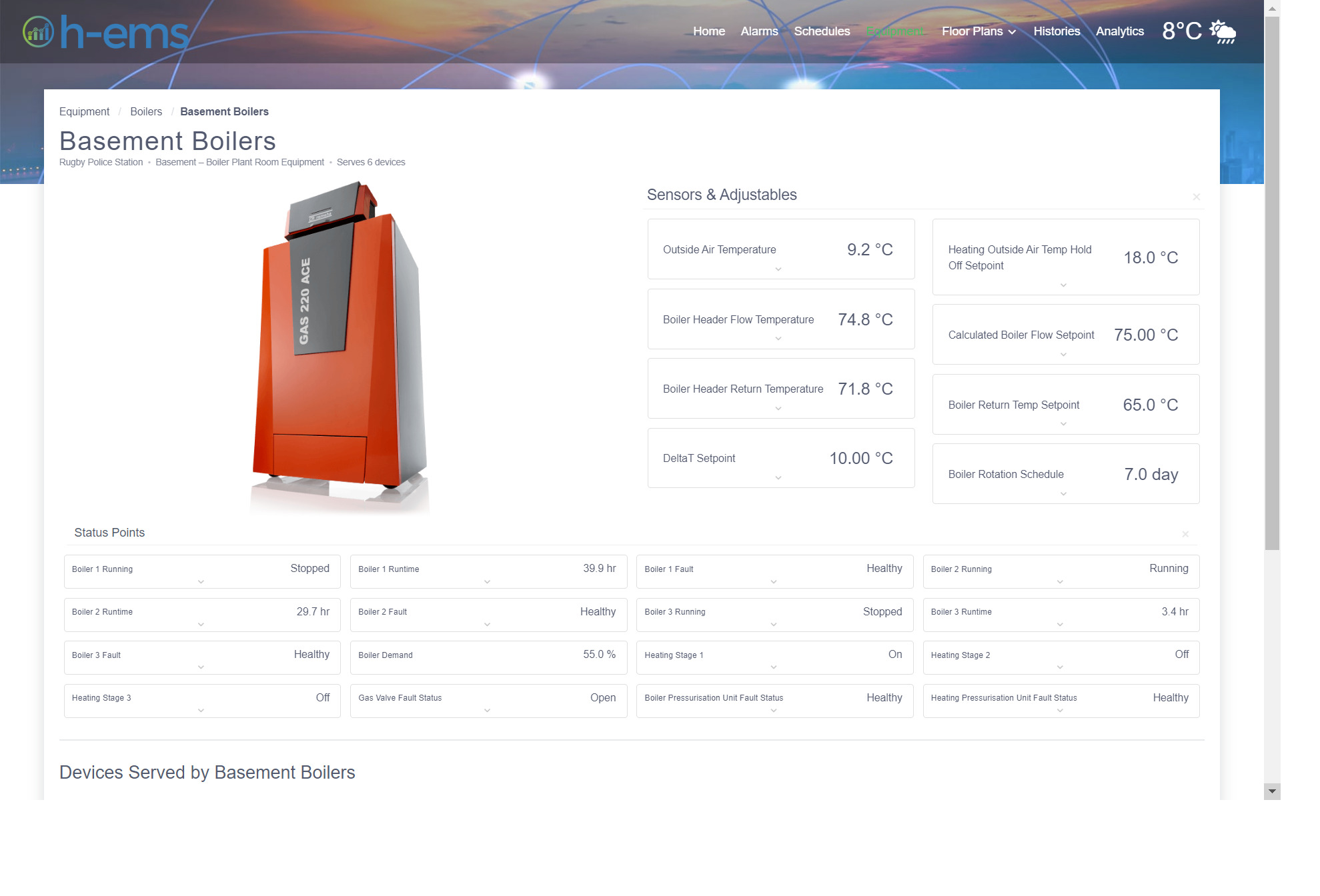
The new system was then connected to the station’s existing HVAC services, allowing the client to improve visibility and coordination across the site without the need for wholesale replacement of the legacy controls estate. We also developed new graphical interfaces to make it easier for site staff to monitor conditions, review system status and manage the building environment more effectively.
Alongside the BMS works, we introduced a wireless monitoring network throughout the building together with environmental sensors measuring factors such as temperature, humidity, CO2, occupancy and lighting levels. This created a broader layer of building performance data to help identify inefficiencies, highlight areas of concern and support future improvement planning.
We also carried out a detailed review of the existing systems and produced a report setting out key issues, recommended actions and costed priorities, giving the client a clearer basis for future investment decisions.
Plant and system functionality
The upgraded platform now provides improved visibility across the station’s main building services, including boiler room plant, cooling systems, air handling and local environmental conditions throughout the building.
By bringing older and newer systems into a more unified management environment, the platform gives site teams a clearer and more usable overview of building performance. The addition of wireless environmental monitoring also provides valuable supporting data that can be used to review comfort conditions, identify inefficiencies and inform future upgrade priorities.
The outcome
The project delivered a more modern and capable BMS platform for the site, while improving visibility across the wider HVAC estate and avoiding unnecessary replacement of existing infrastructure.
The new graphical interface has made it easier for site teams to monitor and manage building services on a day-to-day basis, improving usability and supporting more informed operational decision-making. The detailed condition assessment has also given the client a clearer picture of the legacy systems, helping future maintenance and upgrade works to be planned more effectively.
The addition of wireless environmental monitoring has created an important new layer of building insight, helping identify opportunities to reduce energy use, highlight areas of underperformance and support more targeted investment over time.
Overall, the project created a more joined-up, supportable and forward-looking controls environment for the station — improving current usability while giving the client better information for future estate planning.